Car Dent Repair Guide: Identifying Dent Types and Repair Methods
Covina, United States – February 27, 2026 / VMS Auto Collision Center /
Covina, CA – VMS Auto Collision Center, a trusted dent repair provider in Covina, shares an expert guide to common dent types and the best techniques to restore appearance and value. With years of experience in car dent repair, the facility emphasizes accurate damage assessment, suitable repair method selection, and transparent evaluation procedures that help customers make informed decisions before committing to repair work.

Common Dent Types and Their Effects
Vehicles often incur dents in everyday scenarios, such as crowded parking lots or severe weather events.
-
Door dings typically present as small, smooth depressions with intact paint.
-
Round dents result from blunt objects striking panels, compressing metal evenly around the impact site.
-
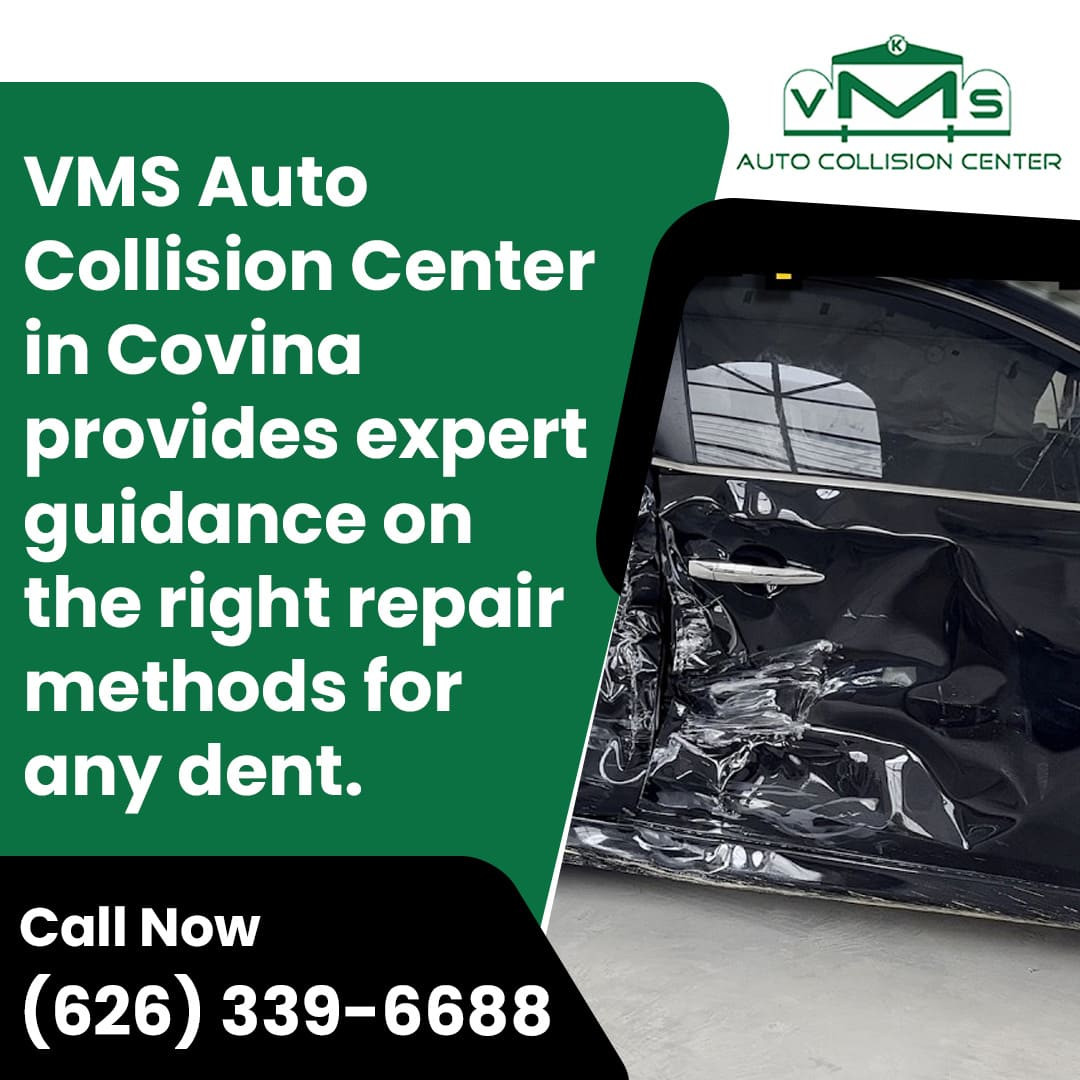
Creased dents occur when metal folds along a defined edge, often accompanied by cracked paint that requires more intensive work.
-
Hail damage involves multiple small impacts spread across horizontal surfaces, complicating the repair scope.
-
Extreme collision dents involve severe deformation and may indicate underlying structural concerns beyond surface panel damage.
Accurate classification of dent types matters because it sets expectations for repair timelines and techniques. Minor, shallow damage with sound paint can often be restored quickly, while deeper creases or collision damage requires more extensive procedures that affect both repair cost and time away from the vehicle.
Professional Dent Repair Methods Explained
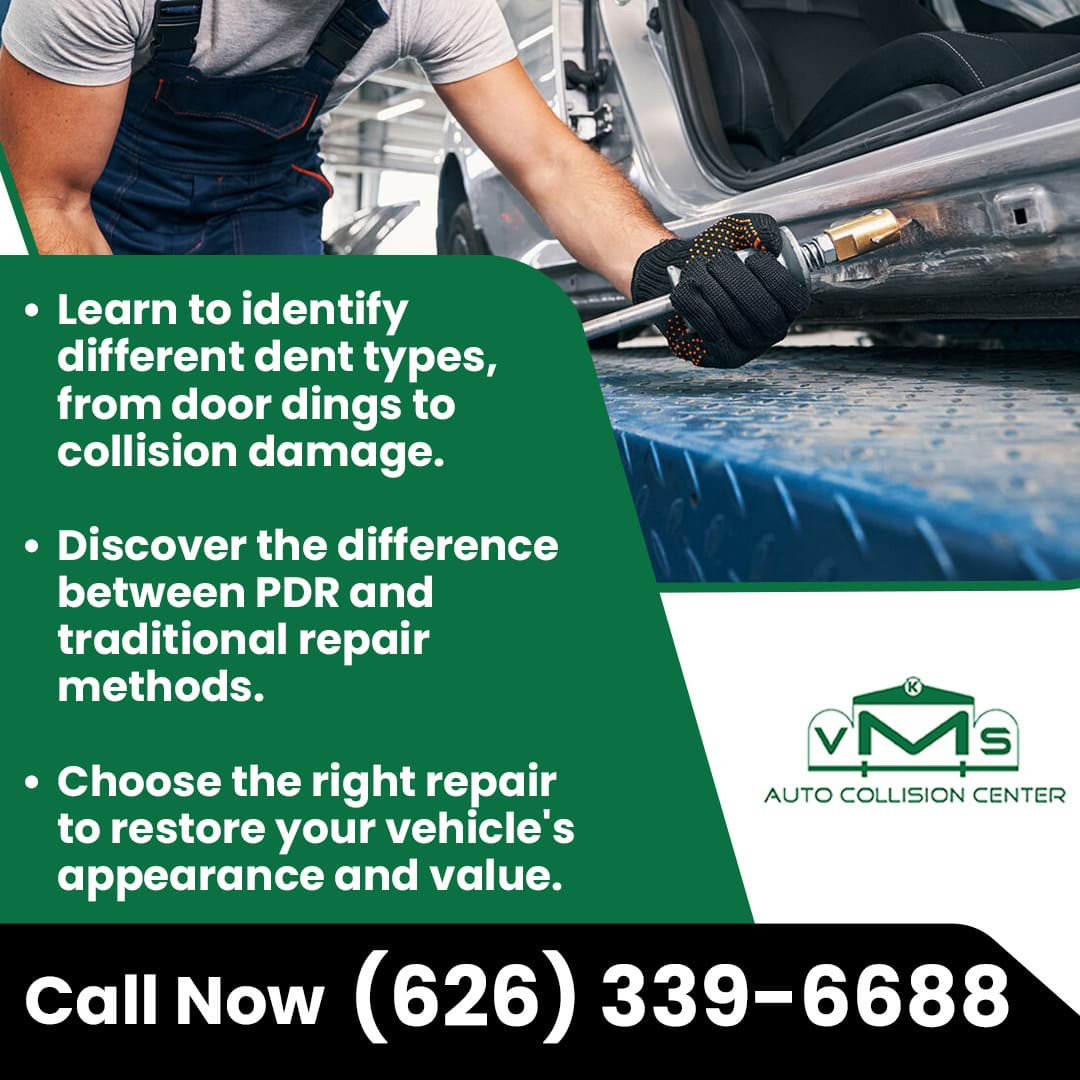
VMS Auto Collision Center uses a range of proven dent repair methods depending on each vehicle’s specific damage profile:
Paintless Dent Repair (PDR)
Paintless dent repair reshapes metal from the panel’s interior surface using specialized tools, preserving the original paint finish. Technicians access the back of the dented area and apply precise pressure to return the metal to its original contour. This method works best on minor door dings, round dents, and hail damage where paint remains intact, and panel access allows tool positioning.
Traditional Bodywork and Refinishing
When dents include paint cracks, deep metal stretch, or limited panel access, traditional bodywork becomes necessary. This process involves reshaping metal, applying body filler, sanding, and repainting with computer‑matched paint systems to restore surface continuity. Traditional methods suit creased dents, deep round dents, and other damage where paint integrity is compromised.
Structural Collision Repair
Extreme collision dents require structural evaluation and repair before surface restoration begins. Advanced measuring systems compare vehicle geometry to manufacturer specifications, revealing hidden frame or reinforcement shifts that visual inspections alone cannot detect. Structural repair maintains proper handling characteristics, supports safety systems, and positions advanced sensor assemblies correctly.
Hybrid Approaches
Some dents benefit from combined methods. For example, large round dents may start with PDR to reshape shallow areas, followed by refinishing where paint stress cracks have formed. Hail damage repairs may pair PDR for intact spots and targeted refinishing for painted areas showing cracks.
Choosing the Right Dent Repair Method
Accurate damage assessment prevents inappropriate repair choices that lead to dissatisfaction and repeat work. Technicians at VMS Auto Collision Center use paint thickness gauges, diagnostic scanning, and experience‑based evaluation to determine the most effective technique for each vehicle. This systematic approach helps set realistic expectations for repair timelines and cost while avoiding common pitfalls associated with DIY dent repair kits, which lack the specialized tools and diagnostic abilities professional facilities use.
DIY kits may work for the simplest, most superficial dents when paint remains perfect, and panel access is unimpeded, but real‑world damage often exceeds these conditions. Improper attempts can stretch metal, crack paint, and necessitate more extensive corrective work. Professional facilities use advanced lighting systems and precision tools that deliver results aligned with auto manufacturer standards.
Benefits of Professional Evaluation
Professional dent assessment gives vehicle owners confidence in recommended repairs. Written estimates outline required procedures and anticipated timelines, helping customers understand what work is necessary and why. Detailed documentation also supports insurance claims and future resale value.
VMS Auto Collision Center backs its work with a Limited Lifetime Warranty, covering workmanship and materials for as long as the customer owns the vehicle. This commitment reflects confidence in repair quality and protects against premature failure.

Schedule Your Professional Dent Assessment in Covina
Understanding dent types and tailored repair methods empowers vehicle owners to choose the right restoration path. For expert dent repairs near you, contact VMS Auto Collision Center at (626) 339‑6688 or email info@vmsautocollision.com. Experienced technicians provide thorough damage evaluation, clear repair guidance, and reliable car dent repair service that supports value and appearance.
Contact Information:
VMS Auto Collision Center
1101 N Azusa Ave A1
Covina, CA 91722
United States
Kevin Kebabjian
(626) 339-6688
https://vmsautocollision.com/


Original Source: https://vmsautocollision.com/car-dent-repair-guide-identifying-dent-types-and-repair-methods/